DOCUMENTARY, ARTICLE
The Amsterdam Tram That Deported 48,000 Jews
During the Nazi occupation, Amsterdam’s municipal trams played a central role in the deportation of Jews, yet this history has remained largely unexamined. In Lost City, filmmaker Willy Lindwer and writer Guus Luijters travel through Amsterdam on the original tram used in the deportations, uncovering documents, testimonies, and locations long erased from public memory.
BACKGROUND INFORMATION
Between July 1942 and September 1943, 63,000 of Amsterdam’s 77,000 Jews were deported, 48,000 of them by tram. 58,000 were murdered. The makers wondered how this extensive operation could take place in such a short time without any form of resistance. The Nazis received the help of many Dutch people in this extensive operation: police officers, civil servants, NSB members and traitors. The Amsterdam tram staff, like many other civil servants, contributed to the German extermination machine. Deportation by tram from Amsterdam is a forgotten story.
Gathering places and tram stops were the last locations Jews saw of their city. They were removed from these ‘guilty places’. Nobody knows those places anymore. It is still possible to spend a life in Amsterdam without being confronted with the drama that has unfolded in the city. After Lost City, that is no longer possible. It is still quite possible to spend an entire life in Amsterdam without being confronted with the drama of the Shoah as it unfolded in the city. After Lost City, that will no longer be possible.
Amsterdam was a ‘Jewish city’. In 1940, about 80,000 Jews lived there and it was called the ‘Jerusalem of the West’. The Holocaust put an end to that. After the war, there was little left of that Jewish city. After four centuries, Jewish life in Amsterdam had almost completely disappeared. The Jewish Corner, as the Jewish part in the heart of the city was called, was depopulated and gone, just like almost all other neighborhoods spread across the city where many Jews had lived. The makers’ amazement at how this could happen in just over a year was their motivation to make the film. They are both Amsterdammers and born during and shortly after the war.
Our collective memory contains a simplified version of the events during the war: the Jews were taken from their homes by the Germans, taken to the ‘Hollandse Schouwburg’ and from there deported via Westerbork to Auschwitz and Sobibor where they were gassed. Reality is too chaotic, too complicated, too vast to really comprehend. We think we know, but we don’t know. Amsterdam had countless ‘guilty places’ from where Jews were taken directly to the stations. Many have never seen the Hollandsche Schouwburg. No one knows these ‘guilty places’ in the city where the tragedy took place. They were the last locations the Jews saw of their city: the gathering places and the stops where they were then herded onto the tram.
When filmmaker Willy Lindwer (Amsterdam, 1946) and writer Guus Luijters (Amsterdam, 1943) started working on ‘Lost City’ project, they discovered the tragic role that the Amsterdam Municipal Tram and the GVB had played in deporting Jews. This role turned out to be much more systematic and extensive than they had suspected.
Lindwer and Luijters decided to make a trip through Amsterdam on the same blue tram that played such a dramatic role in removing Jews during the war. The old trams are now kept in the Tram Museum in the depots on Lekstraat and Havenstraat. They wanted to experience the last journey of so many for themselves. They traveled to the ‘guilty places’, the places of immense suffering that are still there, as if nothing ever happened there. Nobody knows them anymore, everyone ignores them.
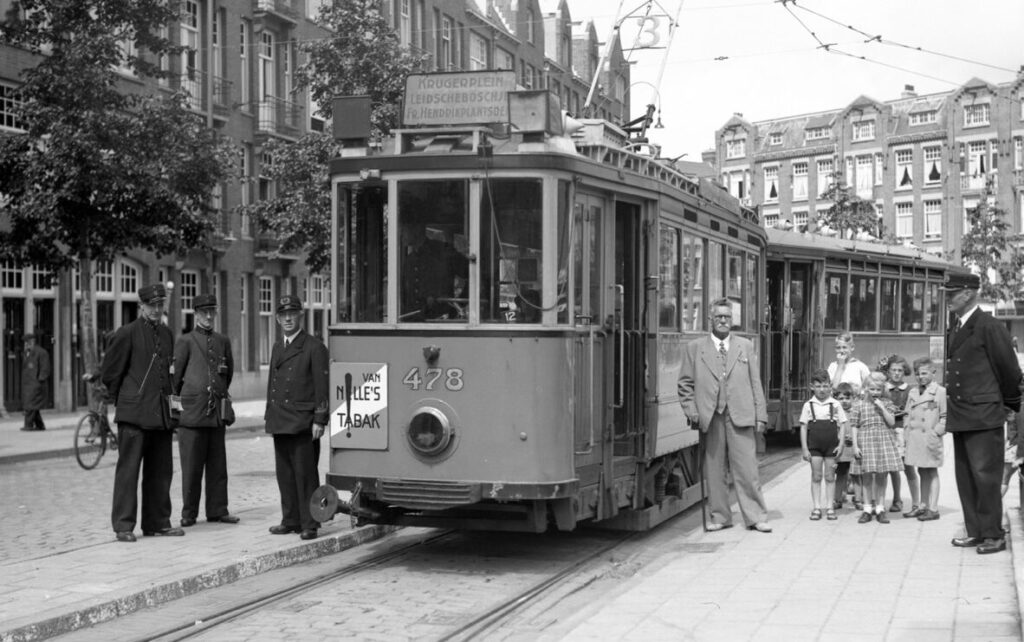
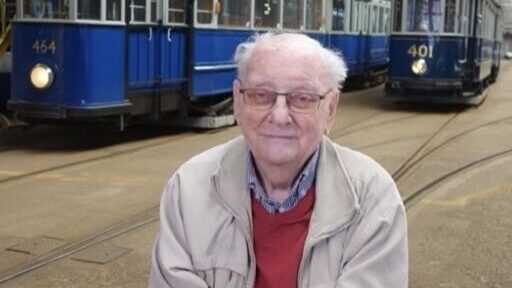


The witnesses who tell their story about the deportation of Jews by tram belong to the very last generation who survived as children and young adults and saw it happen. They tell their moving story at the place where they were taken from their home and where they were put on the tram. The film is set against the beautiful backdrop of contemporary Amsterdam, in the places where so much misery occurred during the war. Jews were gathered at various places in the city and deported from numerous tram stops, usually to Central Station and Amstel Station. These are the ‘guilty places’ in the city, as Guus Luijters calls them. Tram drivers continued to work as usual, as did the many other civil servants and employees of the Municipality of Amsterdam. They unwittingly became cogs in the occupier’s murderous deportation process. The city lost its Jewish soul forever.
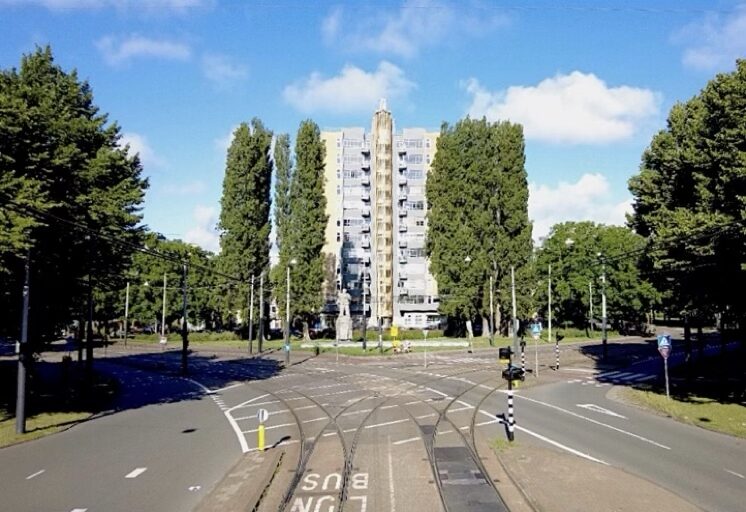
Tram stops, assembly points and stations were the last locations Jews saw of their city. They were deported from these ‘guilty places’, these are the places in Amsterdam of immense suffering and where tragic scenes took place. These are places that everyone now ignores. For example, the now so innocent-looking lawn on Victorieplein in front of the Skyscraper in Amsterdam’s Rivierenbuurt. Thousands of Jews were gathered there in 1943 and then taken away by tram. No one knows yet, there is no marking or memorial plaque.
This also applies to the countless tram stops in the city where Jews were gathered and then herded onto the tram, such as the tram stop on Beethovenstraat near Gerrit van der Veenstraat from which 18,000 were deported. No one knows yet, no one knows the places anymore. They seem so peaceful now.
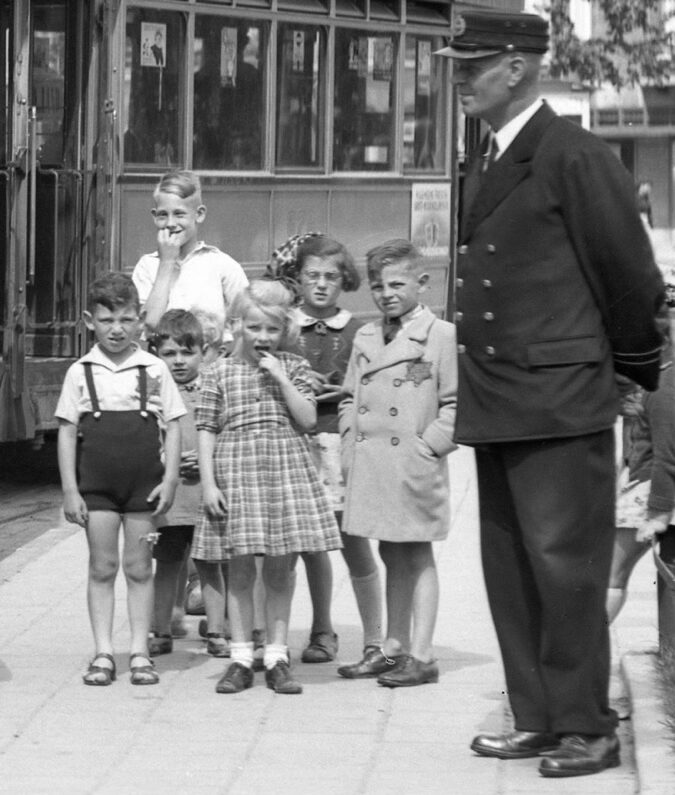
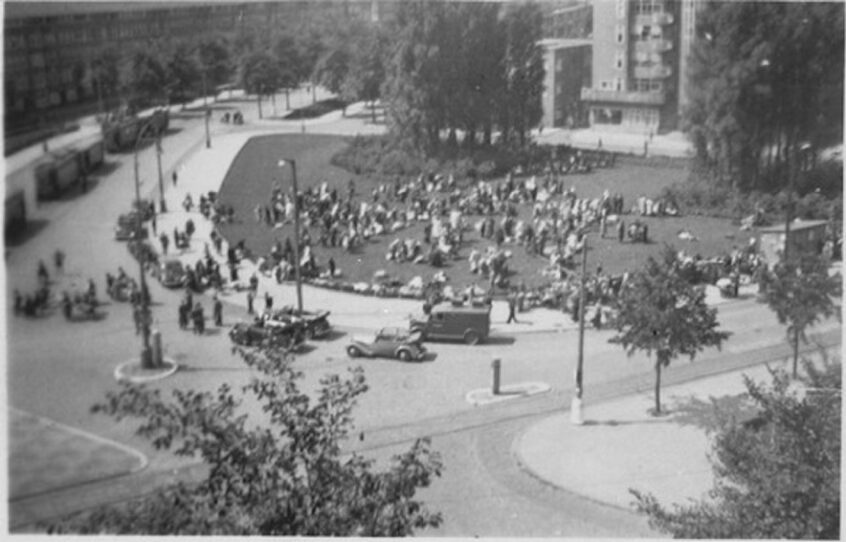
in the Amsterdam Rivierenbuurt. On the left, the rows of deportation trams, the old line 8, which were removed from the depot to remove Jews. An inky black day during the Shoah in Amsterdam.
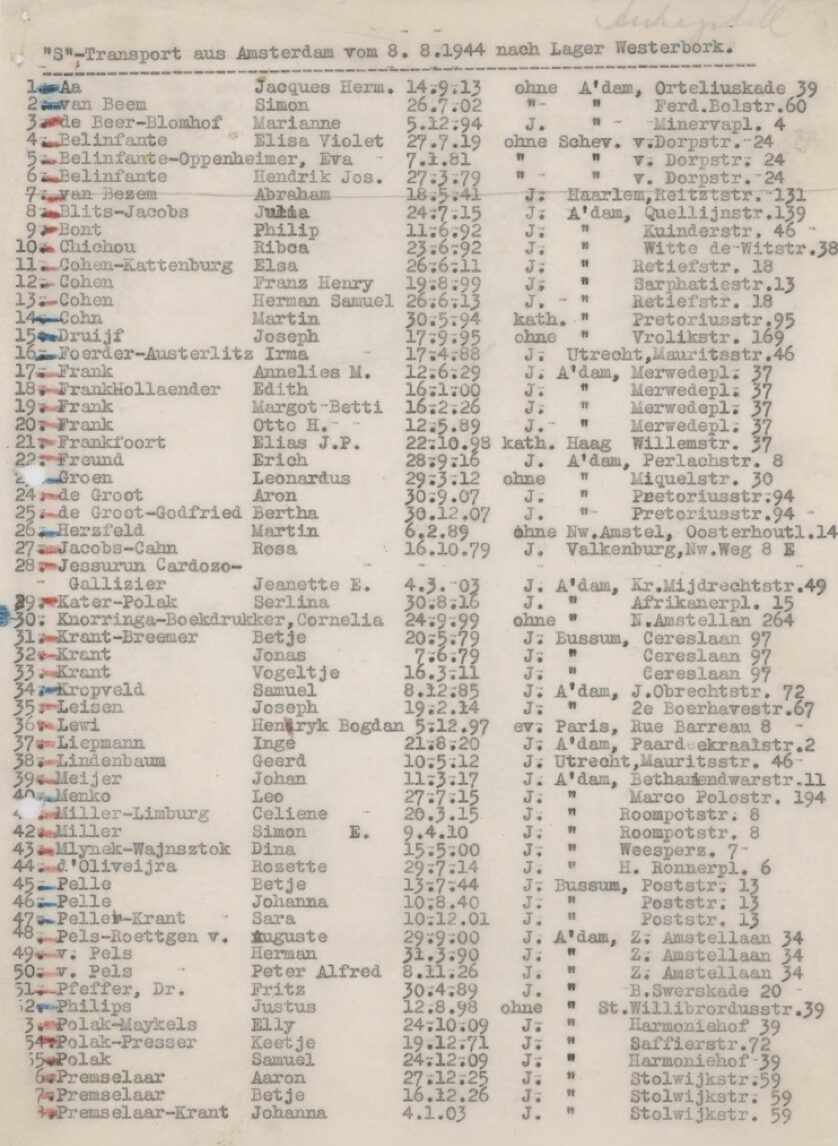
Anne Frank and her family were also taken away by tram on August 8, 1944.

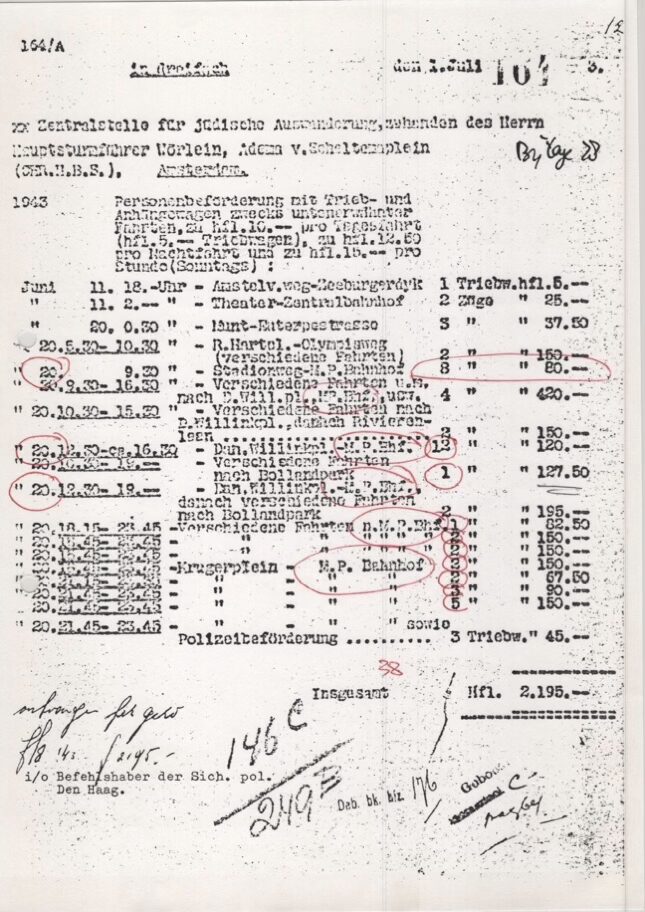
The pencil notes on the invoice are from after the war. It is a bizarre detail, but with a lot of significance, that the GVB called in the Municipal Collection Agency to get the unpaid bill paid. It was and remained ‘business as usual ‘ for the GVB after the war. The question remains where the collection was submitted.
PRESS CLIPPINGS
The Guardian
The Telegraph
Times of Israel
Jewish Telegraphic Agency
FILMMAKERS
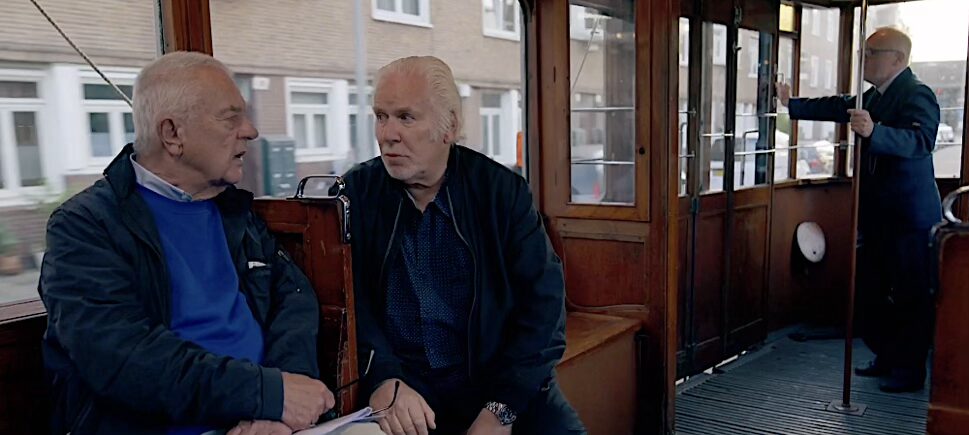
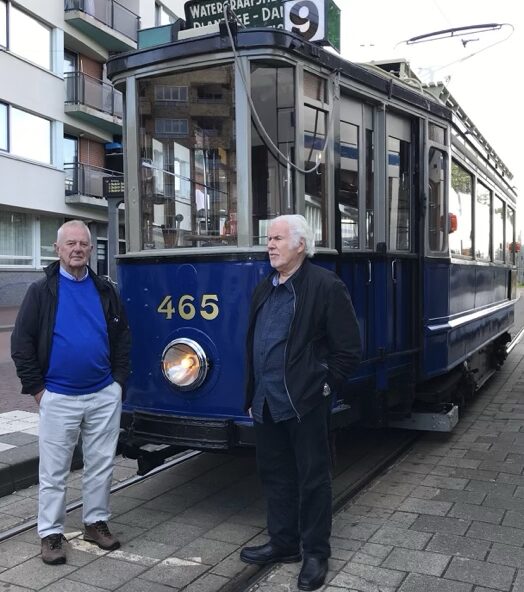
Guus Luijters (left) and Willy Lindwer during their journey through Amsterdam on the authentic tram used during the wartime deportations.
Lost City was developed over four years by filmmaker Willy Lindwer and writer-journalist Guus Luijters, longtime collaborators since their days at the Dutch Film Academy. Working with a team of historians, including Professor Johannes Houwink ten Cate and tram historian Remco van Doren, and with producers Mardou Jacobs and Emjay Rechsteiner, they set out to examine the role of Amsterdam’s municipal tram system during the Nazi occupation.
For the film, Lindwer and Luijters traveled together through the city on the original blue tram used during the war. They revisited tram stops and gathering places, locations that today appear ordinary, yet once marked the final moments of freedom for thousands of Jews. Members of the last surviving generation return to these places in the film to recount their deportation and the role the tram played in it.
During their research, the filmmakers uncovered 23 previously unpublished invoices sent by the tram company to the Nazi authorities for the transport of Jews. These documents form a crucial part of the film, revealing the administrative reality behind the deportations.
Contact 7th Art for the screener to preview the film.
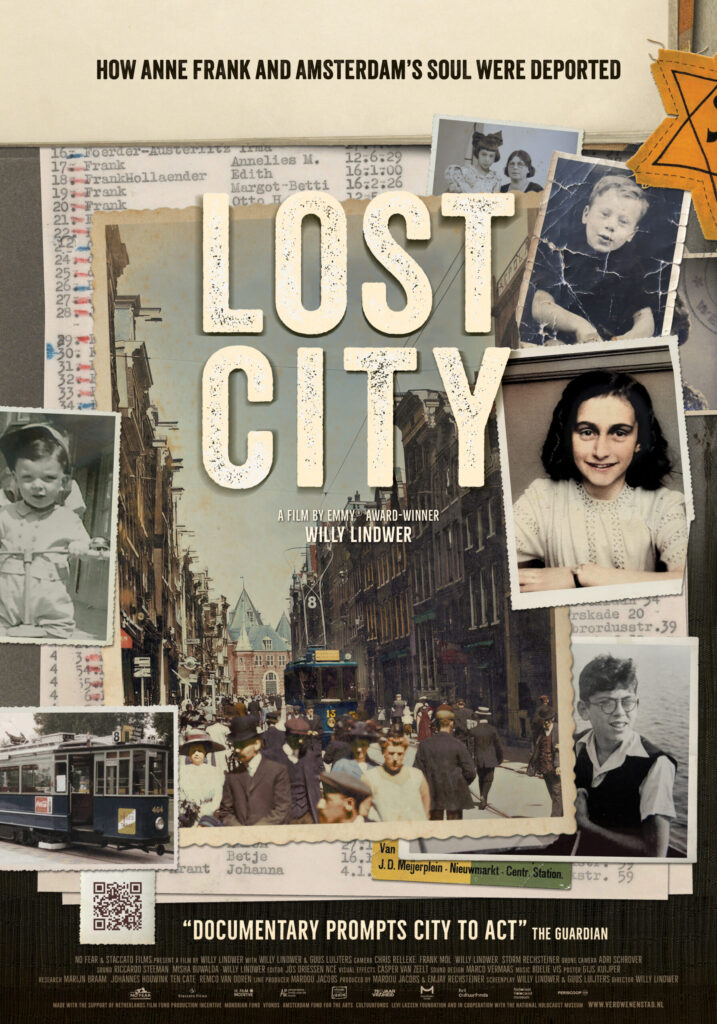
LOST CITY shows the untold story of the Amsterdam city tram that collaborated with the Nazis and deported tens of thousands of Jews, including Anne Frank. We experience their last tram ride.